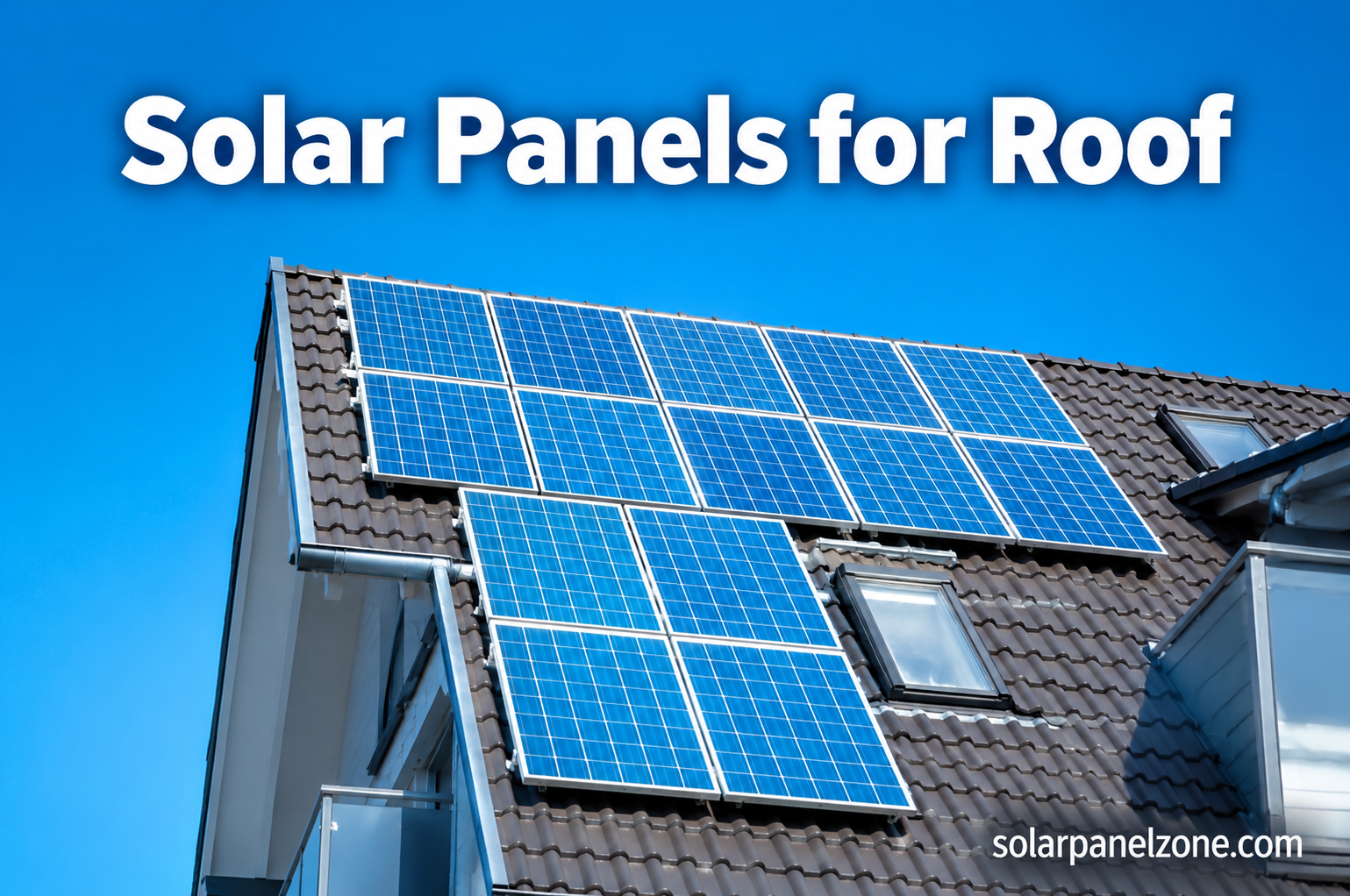
If you typed “solar panels for roof 590k,” you probably have one of three things in mind: a 590-watt panel, a budget of 590,000 in your local currency, or a very large Solar Panels for Roof 590-kilowatt commercial array. All three are valid, and they lead to very different decisions.
This guide covers each one, so you can jump to the part that fits your situation.
Short answer: A Solar Panels for Roof 590W panel is a high-output module, about 1.7 panels per kilowatt. A 590,000 budget buys anywhere from roughly 2 kW to several hundred kW, depending on your country’s price per watt. A Solar Panels for Roof 590 kW system needs about 1,000 Solar Panels for Roof.
What Does “Solar Panels for Roof590k” Actually Mean?
Here is how the three readings break down:
| If you mean… | It translates to | Typical buyer |
|---|---|---|
| Solar Panels for Roof 590W | One module rated at Solar Panels for Roof 590 watts | Homeowners, installers, small businesses |
| 590,000 in currency | A budget that depends on local prices | Homeowners comparing quotes |
| Solar Panels for Roof 590 kW | About 1,000 Solar Panels for Roof of 590W each | Factories, warehouses, schools, farms |
Most product listings online use the first meaning. Most homeowners asking about a roof usually mean the second. Businesses with large flat roofs mean the third.
Reading One: 590W Solar Panels on a Roof
What Is a 590W Solar Panel?
A 590W solar panel is a high-power module that produces up to Solar Panels for Roof 590 watts under standard test conditions. Most are 144-cell, N-type TOPCon modules, often bifacial, sold by manufacturers such as Seraphim, Sunpro, Talesun, Phono, Jinko and JA Solar.
Watt ratings are lab figures. Real output depends on sunlight, temperature, shading, tilt and wiring.
Why These Solar Panels for Roof Panels Are Popular
- Fewer Solar Panels for Roof for the same power. That means fewer clamps, rails and roof penetrations.
- Good use of limited roof space. Useful on smaller or crowded Solar Panels for Roof.
- N-type TOPCon cells tend to degrade slowly and handle heat well, per manufacturer datasheets.
- Bifacial option. The rear side can capture reflected light.
Are Solar Panels for Roof 590W Too Big for a Home Roof?
Sometimes. They are physically large, roughly 2.2 to 2.3 metres long and 1.1 metres wide, so about 2.5 m² each. Weight is often around 30 kg or more, and dual-glass versions weigh more.
Handling them on a steep or narrow roof can be awkward. Many installers prefer smaller panels for tight layouts, and larger ones for open, flat or ground-mounted arrays.
Always check the exact datasheet for your model before you plan the layout.
How Many 590W Panels Do You Need?
Divide your target system size in watts by Solar Panels for Roof 590. Here are common sizes:
| Target system | Panels (590W) | Actual size | Panel area (approx.) |
|---|---|---|---|
| 3 kW | 5 | 2.95 kW | about 13 m² |
| 5 kW | 9 | 5.31 kW | about 23 m² |
| 6 kW | 10 | 5.90 kW | about 26 m² |
| 8 kW | 14 | 8.26 kW | about 36 m² |
| 10 kW | 17 | 10.03 kW | about 44 m² |
These areas cover panels only. You also need clear space for access paths, vents, chimneys and fire-safety setbacks, which vary by country.
Do Bifacial Panels Make Sense on a Solar Panels for Roof?
Bifacial Solar Panels for Roof collect light on both sides. The rear gain depends on what sits behind them: light-coloured roof membranes and open air gaps help, while dark roofing and flush-mounted Solar Panels for Roof help very little.
On a pitched roof withSolar Panels for Roof mounted close to the surface, expect a small benefit. On a bright flat roof with tilted racking, the gain can be more meaningful. Treat manufacturer gain claims as best-case numbers.
Matching Solar Panels for Roof to an Inverter
Pairing matters as much as the Solar Panels for Roof itself. Check these points:
- Maximum input voltage. A Solar Panels for Roof open-circuit voltage (Voc) rises in cold weather. A typical 590W TOPCon module has a Voc around 52 V, so strings must stay under the inverter’s limit on the coldest day.
- MPPT range. The inverter’s maximum power point tracking window must suit your string length.
- Current limits. High-wattage Solar Panels for Roof can push higher current than older inverters accept.
- Microinverters. Some models do not support high-wattage modules, so confirm compatibility.
If you are unsure, ask your installer for a written string-sizing calculation.
Solar Panels for Roof 590W vs Smaller Panels
| Factor | 590W-class panel | 400–450W panel |
|---|---|---|
| Solar Panels for Roof Panels per kW | About 1.7 | About 2.3 to 2.5 |
| Size and weight | Larger, heavier | Easier to carry |
| Layout flexibility | Lower on small roofs | Higher |
| Racking and labour | Fewer mounting points | More mounting points |
| Best fit | Open or flat roofs, commercial | Complex residential roofs |
Reading Two: A Solar Panels for Roof 590,000 Budget
The Cost-Per-Watt Method
Installers and cost guides price Solar Panels for Roof by the watt. The formula is simple:
System size (watts) = budget ÷ price per watt
Price per watt varies enormously by country, so 590,000 means very different things depending on where you live.
What Price Per Watt Looks Like
Published ranges from recent guides:
| Market | Typical installed price (before incentives) |
|---|---|
| United States | About $2.50 to $3.50 per watt |
| United Kingdom | About £1.40 to £2.00 per watt |
| Australia | Typical home systems about $3,500 to $10,000, depending on capacity |
| Pakistan | Roughly Rs. 4 to 5 lakh for a 3 kW on-grid system; Rs. 6.5 to 8.5 lakh for a 3 kW hybrid |
These are market ranges, not quotes. Prices move month to month, so always compare current written offers.
Worked Examples
Example 1: Rs. 590,000 in Pakistan. At about Rs. 133 to 167 per watt for on-grid, that is roughly 3.5 to 4.4 kW. At hybrid pricing, it drops to around 2 to 2.7 kW, because batteries and hybrid inverters add cost.
Example 2: $590,000 in the United States. At $2.50 to $3.50 per watt, that is roughly 170 to 235 kW. This is a commercial-scale project, not a home system. Large projects usually price lower per watt than small ones, so the real size could be higher.
Example 3: £590,000 in the UK. At £1.40 to £2.00 per watt, that is roughly 295 to 420 kW. Again, that is a commercial roof.
The lesson: if you meant 590,000 in a lower-cost market, you are shopping for a home system. If you meant it in a high-cost market, you are shopping for a commercial one.
Where the Money Goes
Panels are no longer the biggest cost. Industry sources say soft costs, including labour, permits, design, sales and overhead, can make up a large share of the total installed price.
A typical quote covers:
- Panels
- Inverter (string, hybrid or micro)
- Racking and mounting hardware
- Cabling, breakers and surge protection
- Installation labour
- Permits and grid connection
- Batteries, if included
That is why the cheapest panel price does not always mean the cheapest system. A poor installation can erase any savings.
On-Grid, Hybrid or Off-Grid?
| Type | How it works | Pros | Cons |
|---|---|---|---|
| On-grid | Feeds the grid, no battery | Lowest cost, best value per watt | No power during outages |
| Hybrid | Grid plus battery | Backup power, more self-use | Higher cost, battery replacement |
| Off-grid | Fully independent | No utility reliance | Expensive, needs large battery |
At a fixed budget, a battery cuts your panel capacity noticeably. If outages are rare, on-grid is usually the better value. If outages are frequent, a hybrid may justify the smaller array.
Reading Three: A 590 kW Commercial Roof
A 590 kW array equals exactly 1,000 panels of 590W. Panel area alone is roughly 2,600 m², and flat-roof tilt spacing can push the needed roof area well beyond that.
Panel suppliers ship in pallets of about 36 panels, and a full container carries roughly 576 to 648 depending on the model. So 1,000 panels is close to two truckloads.
Commercial buyers should check:
- Structural engineering. A qualified engineer should confirm roof load capacity.
- Grid connection. Large systems often need utility studies and approvals.
- Roof condition. Replace or repair the roof first if it has less than the system’s lifespan left.
- Power purchase or lease options. Some businesses prefer to avoid upfront capital.
- Inverter strategy. Central, string or distributed inverters affect cost and maintenance.
Is Your Roof Ready?
Check these before you pay for anything:
- Age and condition. Solar lasts 25 years or more, so an old roof should be fixed first.
- Structure. Rooftop solar adds weight, and your installer or engineer should confirm the roof can carry it.
- Direction and tilt. In the northern hemisphere, south-facing roofs usually perform best, and in the southern hemisphere, north-facing ones.
- Shading. Trees, chimneys and nearby buildings can sharply cut output.
- Access and safety. Many places require clear pathways and rapid-shutdown devices so firefighters can work safely. Panels produce power whenever light hits them.
Compliance varies. Look for products certified to IEC 61215 and IEC 61730, or UL equivalents in North America, and use installers certified under local schemes such as MCS in the UK or Clean Energy Council accreditation in Australia.
Net Metering, Net Billing and Payback
Your savings depend on how your utility pays for exports. Many markets are moving away from one-for-one net metering. Pakistan, for example, shifted to net billing in 2026, which pays a much lower rate for exported power than the retail price.
This changes the best strategy: use as much solar power as possible yourself, rather than selling it back.
To estimate payback, use this formula:
Payback (years) = net system cost ÷ annual bill savings
Paybacks range from a few years to over a decade, depending on electricity prices, incentives and self-consumption. Be wary of any quote that promises a precise payback without seeing your bills.
Incentives also change often. In the United States, residential tax credit rules were revised recently, so confirm what applies to your installation date before you count on it.
How to Compare Solar Quotes
Follow these steps:
- Gather your bills. Use 12 months of usage data.
- Get three or more written quotes. More competition usually means better pricing.
- Convert each quote to price per watt. Divide total cost by system watts.
- Check the brands and models. “Premium panels” is not a specification.
- Compare warranties. Ask about product, performance and workmanship warranties, and who honours them locally.
- Confirm what is included. Permits, grid application, monitoring and cabling can be hidden extras.
- Check the installer’s credentials. Look for licences, insurance and local references.
- Pay in stages. Tie payments to completed milestones.
Common Mistakes to Avoid
- Buying on panel price alone. Inverters, wiring and workmanship decide reliability.
- Oversizing for export. With lower export rates, bigger is not always better.
- Ignoring shading. A small shadow can drag down a whole string.
- Skipping string sizing. High-voltage panels on the wrong inverter can trip or damage equipment.
- Forgetting battery replacement. Batteries wear out sooner than panels.
- Doing risky DIY. Rooftop work and electrical connections are dangerous, and many places require licensed work for grid-tied systems.
- Assuming incentives will last. Check deadlines and eligibility.
Which Path Fits You?
- You want 590W panels for a home roof: Check your layout and inverter first. Consider smaller panels if your roof is tight.
- You have a 590,000 home budget: Divide it by local price per watt, then decide between on-grid and hybrid.
- You have a business roof: Start with a structural survey and a grid-connection enquiry.
- You are unsure: Gather your bills and request three quotes before deciding on anything.
Frequently Asked Questions
How many 590W panels do I need for a 5 kW system?
Nine panels give you 5.31 kW, and eight give 4.72 kW. Choose based on your inverter size and available roof space.
How much does a 590W solar panel produce per day?
It depends on sunlight hours, orientation and shading. In a location with about five peak sun hours, expect roughly 2 to 2.5 kWh per day after real-world losses. Check local solar data for your area.
What can I buy with a 590,000 solar budget?
It depends on your local price per watt. In lower-cost markets, it may buy a 2 to 4.5 kW home system. In higher-cost markets, it can fund a commercial array in the hundreds of kilowatts.
Are bifacial 590W panels worth it on a roof?
They can be, mainly on flat, light-coloured roofs with tilted racking. On pitched roofs with flush mounting, the rear-side gain is usually small, so the extra cost may not pay off.
What size inverter do I need for 590W panels?
Match the inverter to total array size, and check maximum input voltage, MPPT range and current limits. A 5.31 kW array, for instance, is often paired with a 5 kW inverter, but your installer should confirm the exact model.
Is on-grid or hybrid better for a limited budget?
On-grid gives you more watts for the money. Hybrid costs more but gives backup during outages. Choose hybrid only if outages cause real problems.
Can I install solar panels myself?
In some places you can handle parts of the work, but the grid connection usually requires a licensed electrician, and insurance or incentives may require certified installers. Rooftop work also carries serious fall and electrical risks.
How long do solar panels last?
Most manufacturers offer performance warranties of 25 years or more, and panels often keep producing beyond that at reduced output. Inverters typically need replacement sooner, and batteries sooner still.
Do I need planning permission or permits?
Rules vary by country and region. Many places require building or electrical permits and utility approval. Your installer should handle or advise on these.
Conclusion
“590k” can mean a 590W panel, a 590,000 budget or a 590 kW commercial array. Once you know which one you mean, the path is clear.
Start with your electricity bills, measure your usable roof, and convert every quote to price per watt. Match panels to the right inverter, choose on-grid or hybrid honestly, and verify local incentives and export rules before you sign.
Take your time comparing three written quotes. A careful decision now will pay off for the next 25 years.
Unfulfilled Points: An interactive budget-to-kW calculator and FAQ schema markup can’t be delivered in plain article text, so I replaced them with formulas and worked examples. Country incentive figures beyond the provided data were left out to avoid unverified claims.
These information about solar panel mounting are gathered from different surveys, medical tests and tech giants like Tom’s Guide and more. Our top priority is to provide you valuable information.
For More Details About Different Solar Panels Click Here