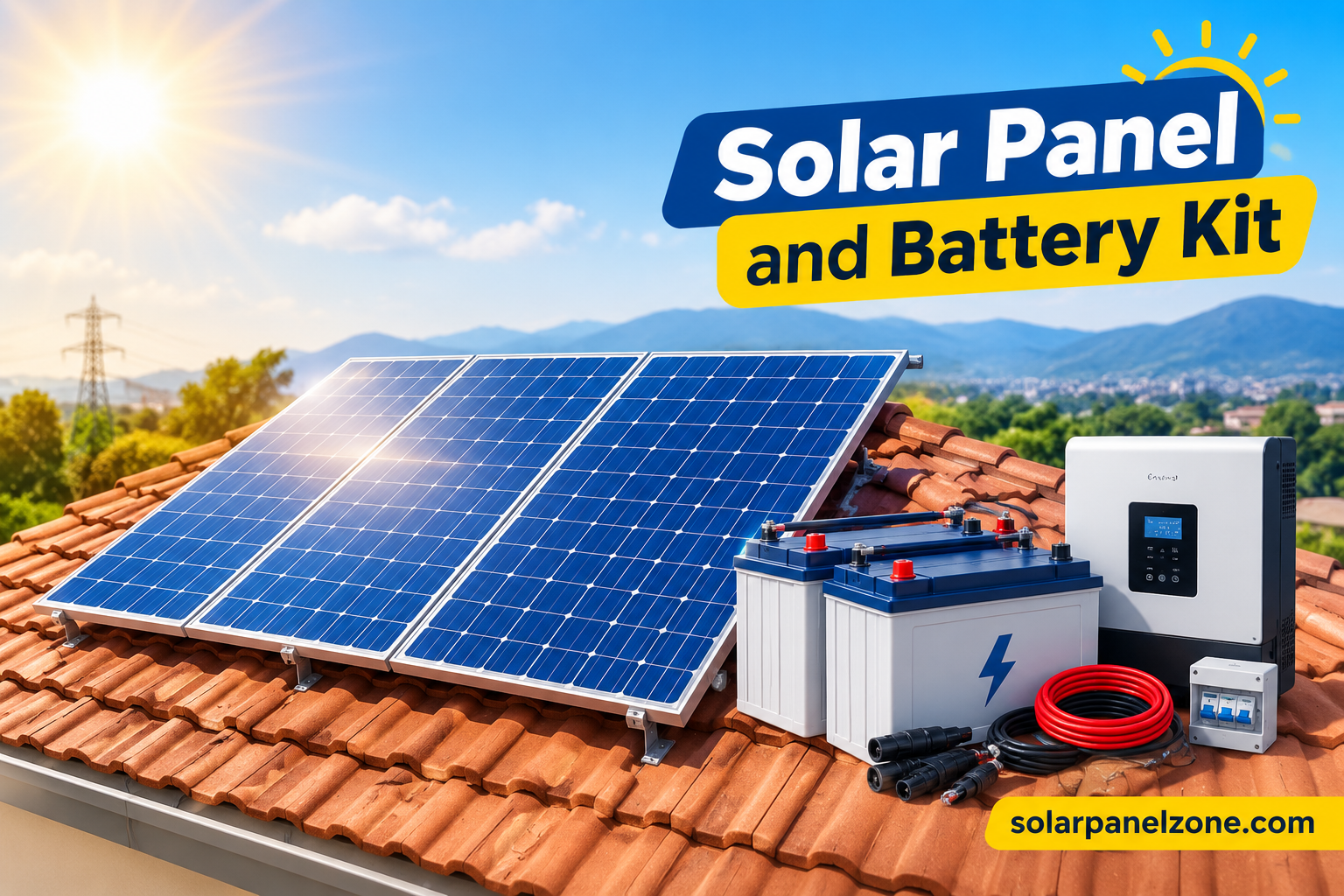
Solar Panel and Battery Kit: How to Go Off Grid with Solar Power (2026 Guide)
Yes, you can go off grid with solar power. You need Solar Panel and Battery Kit sized for your lowest-sun month, battery storage for one to three days, a compatible inverter and charge controller, proper protection, and usually a backup generator for long stretches of bad weather.
That short answer hides a lot of decisions. This guide walks through what a solar panel and battery kit actually contains, how to size one, what it costs, and where people go wrong.
What Is an Off-Grid Solar Panel and Battery Kit?
An off-grid solar kit (also sold as a solar generator kit or solar battery kit) is a matched bundle of equipment that generates, stores and delivers electricity without a utility connection.
Most complete Solar Panel and Battery Kit include five core parts:
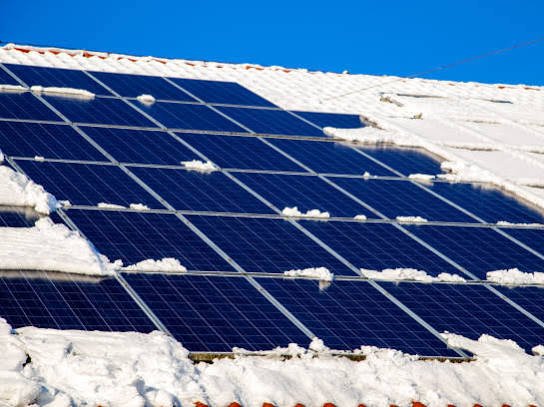
- Photovoltaic (PV) Solar Panel and Battery Kit that turn sunlight into DC power
- An MPPT charge controller that manages how the Solar Panel and Battery Kit charge the batteries
- A battery bank, usually lithium iron phosphate (LiFePO4) or lead-acid
- An inverter or inverter-charger that converts DC to AC for household appliances
- Cabling, fuses, breakers and mounting hardware
Smaller portable kits bundle the battery, controller and inverter into one “Solar Panel and Battery Kit generator” box and add folding panels. Larger home kits are built from separate components that you wire together.
Does a Rooftop System Count as Off Grid?
No. Solar Panel and Battery Kit on a roof do not make a home off grid. Most grid-tied systems shut down during a blackout for safety reasons.
To run independently, you need a Solar Panel and Battery Kit battery and inverter that can “island”, meaning form their own local grid and recharge from the panels every day without any utility connection.
Who Should (and Shouldn’t) Go Off Grid
Off-grid Solar Panel and Battery Kit solar makes the most sense when the grid is absent, unreliable or very expensive to reach.
Good fits include:
- Cabins, tiny homes and caravans
- Remote farms and borehole or water-pump sites
- Homes facing frequent outages or load-shedding
- Small businesses and workshops in remote locations
- Emergency preparedness setups
If you already have a reliable grid and a fair export or net-metering scheme, a grid-tied system with optional battery backup usually costs less and is simpler. Going fully off grid is a lifestyle and engineering choice, not just a cost-saving one.
Off-Grid vs Hybrid vs Grid-Tied: Quick Comparison
| Feature | Off-grid | Hybrid (grid + battery) | Grid-tied (no battery) |
|---|---|---|---|
| Works in a blackout | Yes | Yes (if set up for backup) | No |
| Needs largeSolar Panel and Battery Kit bank | Yes | Moderate | No |
| Needs a generator | Usually | Rarely | No |
| Upfront cost | Highest | Medium-high | Lowest |
| Best for | No or poor grid access | Unreliable grid, high tariffs | Reliable grid, net metering |
For many households, a hybrid system delivers most of the independence at far lower cost than going fully off grid.
How to Go Off Grid with Solar Panel and Battery Kit: Step by Step
Follow these steps in order. Skipping the first two is the most common reason systems end up the wrong size.
- Check the rules. Confirm what your country, region and local authority require for permits, inspections and disconnecting from the utility. Also ask your insurer.
- Audit your loads. List every appliance, its wattage and daily hours of use, then total the watt-hours per day.
- Find your winter sun. Look up peak sun hours (PSH) for your worst month using tools such as NREL PVWatts, PVGIS or the Global Solar Panel and Battery Kit Atlas.
- Size the array. Divide daily kWh by winter PSH, then by about 0.8 to allow for system losses.
- Size the Solar Panel and Battery Kit. Multiply daily kWh by the days of autonomy you want, then divide by usable depth of discharge and round-trip efficiency.
- Choose voltage and chemistry. For homes, 48V with LiFePO4 is the common choice.
- Size the inverter. Cover your largest simultaneous load plus surge, with about 25% headroom.
- Plan protection. Add fuses, DC isolators, a breaker panel, earthing and surge protection.
- Install and commission. Hire a licensed professional for high-voltage or Solar Panel and Battery Kit work if unsure.
- Monitor and adjust. Track production and usage for the first month and shift loads to daylight where possible.
Worked Example: Sizing for Winter
Sizing for the annual average is the classic mistake. Production in the darkest months can be a fraction of summer output, and winter is when you need the system most.
Take a small house using 12 kWh per day, with 3 peak sun hours in December.
| Item | Calculation | Result |
|---|---|---|
| Solar array | 12 ÷ 3 ÷ 0.8 | about 5 kW |
| Solar Panel and Battery Kit (1 day, generator backup) | 12 × 1 ÷ 0.9 ÷ 0.95 | about 14 kWh |
| Solar Panel and Battery Kit (2 days, no generator) | 12 × 2 ÷ 0.9 ÷ 0.95 | about 28 kWh |
| Inverter | Peak simultaneous load + 25% | often 5–8 kW |
Notice how the second Solar Panel and Battery Kit line doubles the largest cost. Many owners find that a modest generator for rare cloudy stretches is far cheaper than buying a second day of storage.
Practical tip: Cutting your daily use from 12 kWh to 8 kWh by switching to efficient lighting, a DC or high-efficiency fridge, and gas or wood for heating and cooking can shrink the whole system by a third.
Understanding Surge Loads
Appliances with motors, such as fridges, freezers, borehole pumps and compressors, can draw several times their running power for a moment when they start.
An inverter that handles your average load but not the start-up surge will trip or shut down. Always check the surge rating, not just the continuous rating, and check the appliance’s start-up current on its nameplate or datasheet.
If you run a pump, consider a soft starter or a variable-speed pump to reduce the surge.
Choosing the Right Solar Panel and Battery Kit
The battery is the most expensive and most failure-prone part of the system, so it deserves the most attention.
| Feature | LiFePO4 | AGM / gel lead-acid | Flooded lead-acid |
|---|---|---|---|
| Usable capacity | Roughly 80–100% | Roughly 50% | Roughly 50% |
| Cycle life | Several thousand cycles | Hundreds to about a thousand | Hundreds to about a thousand |
| Weight | Light | Heavy | Heaviest |
| Maintenance | Minimal | Low | Regular topping up |
| Upfront cost | Higher | Medium | Lowest |
| Cost over its lifetime | Often lowest | Medium | Often highest |
Cycle life varies by brand and use, so confirm figures on the manufacturer’s datasheet and warranty.
Cost per Usable kWh
A cheap Solar Panel and Battery Kit with 50% usable capacity may actually cost more per usable kWh than a pricier lithium battery. Compare price divided by usable kWh, then divide again by expected cycles to see the real cost of each kWh you store.
Temperature Matters
LiFePO4 batteries generally should not be charged below freezing unless they have built-in heating. In hot climates, high temperatures shorten life for every chemistry. Put the Solar Panel and Battery Kit in a ventilated, temperature-suitable space rather than a sun-baked shed.
12V, 24V or 48V?
Higher voltage means lower current for the same power, which allows thinner cables, fewer losses and safer wiring.
- 12V: suitable only for very small systems such as vans or tiny cabins
- 24V: small to medium systems
- 48V: the standard for homes and anything above a few kilowatts
Many manufacturers advise keeping the current in any single Solar Panel and Battery Kit battery circuit moderate, which is another practical reason 48V wins as systems grow.
MPPT vs PWM Charge Controllers
MPPT (maximum power point tracking) controllers extract more energy from the Solar Panel and Battery Kit panels, especially in cold weather or when panel voltage is much higher than Solar Panel and Battery Kit voltage. PWM controllers are cheaper but less efficient.
For anything beyond a small camping setup, choose MPPT. Hybrid and all-in-one inverters usually have an MPPT stage built in.
Kit, Custom Build or Installer?
| Factor | Pre-matched kit | Custom build | Installed system |
|---|---|---|---|
| Compatibility risk | Low | Higher | Lowest |
| Flexibility | Limited | High | High |
| Typical cost | Lower | Varies | Highest |
| Support | One vendor | Several vendors | Installer plus brands |
| Best for | First-time buyers, cabins | Technical owners, larger homes | Complex homes, strict regulations |
Some kit sellers claim their kits cost roughly half as much as a professionally installed system. That may hold for equipment alone, but it often ignores labour, permits and the cost of mistakes. Get a quote from an installer to compare fairly.
How Much Does an Off-Grid Solar Panel and Battery Kit Cost?
Prices depend on country, import duty, brand and Solar Panel and Battery Kit size. The ranges below are rough equipment costs in US dollars; confirm with current local quotes.
| Kit class | Typical size | Approximate equipment cost |
|---|---|---|
| Portable | 100–400 W panels, under 2 kWh Solar Panel and Battery Kit | $200–$1,500 |
| Small cabin | 1–2 kW array, 2–5 kWh Solar Panel and Battery Kit | $1,500–$4,000 |
| Medium home | 3–6 kW array, 5–15 kWh Solar Panel and Battery Kit | $5,000–$12,000 |
| Large home | 8–15 kW array, 15–40 kWh battery | $14,000–$35,000+ |
Budget extra for installation, mounting, permits, a generator if needed, and eventual battery replacement. Batteries are usually the largest single cost, which is why reducing your loads pays off so strongly.
Regional Differences That Change Your Design
| Region | Sun and climate | Key considerations |
|---|---|---|
| Pakistan and South Asia | High sun; heat and dust | Load-shedding drives hybrid demand; clean panels often; check NEPRA net-metering rules; confirm authorised warranty support |
| United States | Roughly 4–6 PSH in many areas | NEC Articles 690 and 706; local inspection by the authority having jurisdiction; UL 1741 and UL 9540 labels; incentives change often |
| United Kingdom | Low winter sun | BS 7671 wiring rules; MCS-certified installers for grid schemes; generators or hybrid designs are common |
| Australia | Strong sun; remote sites | AS/NZS 5139 battery rules; Clean Energy Council accredited installers |
| Middle East and Africa | High sun; heat and dust | Heat-rated components; ventilated enclosures; local service availability matters more than brand names |
Wherever you live, search for “off-grid solar kit” plus your country, then look for authorised dealers, accredited electricians and EPC contractors who can honour warranty claims locally.
Legal, Insurance and Safety Checks
The rules vary widely. Some places require permits and inspection for any solar installation, and some restrict fully disconnecting from utilities in areas where grid service is available.
Before you buy, check three things:
- Permits and inspections with your local building or electrical authority
- Insurance: an uncertified installation can void cover
- Equipment certification: look for IEC 61215 and IEC 61730 for panels, IEC 62619 or UL 1973 and UL 9540 for batteries, and UL 1741 for inverters, where applicable
Lithium batteries shipped internationally should carry UN 38.3 test compliance.
Safety basics apply to every system: correctly sized cable, a fuse or breaker close to the battery, a DC isolator, earthing, surge protection and clear shutdown labelling.
Pros and Cons of Going Off Grid
Pros
- Independence from outages and tariff increases
- Power in places the grid cannot reach
- Low running costs once installed
- Quiet, clean operation
Cons
- High upfront cost, especially for battery storage
- Winter and cloudy-weather shortfalls
- You are responsible for maintenance and repairs
- Batteries need eventual replacement
- Heavy electric loads such as heating or large air conditioners are difficult to support
Five Costly Mistakes to Avoid
- Sizing for summer. Always design around your lowest-sun month.
- Ignoring surge power. Check start-up demand for pumps, fridges and compressors.
- Buying on panel watts alone. Compare usable battery kWh, continuous inverter output and warranty terms.
- Skimping on cables and fuses. Undersized wiring is a leading cause of overheating and fire.
- Mixing old and new batteries. Mismatched age or chemistry shortens the life of the whole bank.
Also watch for shading. Even a small shadow on one panel can cut a whole string’s output.
Maintenance and Battery Life
Off-grid systems need little upkeep, but they are not maintenance-free.
- Rinse panels when dusty, ideally early or late in the day
- Tighten and inspect electrical connections periodically
- Check battery state of charge and avoid frequent deep discharges
- Update inverter and battery firmware if the manufacturer provides it
- Keep the battery space ventilated and within its temperature range
Well-treated LiFePO4 batteries commonly last a decade or more in normal use, though the warranty tells you what the manufacturer is willing to stand behind.
Alternatives to Full Off-Grid
If the numbers look daunting, consider a partial approach:
- Hybrid solar and battery to cover outages and peak tariffs
- Grid-tied solar with net metering where available
- Portable power station and folding panels for essential loads
- Solar and generator hybrid to keep the battery bank smaller
- Small wind or micro-hydro where the site supports it
You can also start with a small system for essentials and expand later, as long as you choose an inverter and battery that support expansion.
Frequently Asked Questions
Can you go completely off grid with solar?
Yes, if the system is sized for your winter conditions and your actual loads. Most people also keep a backup generator for extended cloudy periods, since storing enough battery for every worst case is expensive.
How much does it cost to go off grid with solar?
A small cabin system can cost a few thousand dollars in equipment, while a full home system can run well above ten thousand. Battery capacity and local installation costs drive most of the difference.
How many solar panels do I need to go off grid?
Divide your daily kWh by your winter peak sun hours, then by about 0.8. For 12 kWh a day and 3 sun hours, that is roughly 5 kW, or about eleven 450 W panels.
Do I need a generator if I go off grid?
Usually it is wise. A generator covers long cloudy spells and costs less than the extra battery needed to cover every possible bad week.
How long do off-grid batteries last?
LiFePO4 batteries are commonly rated for several thousand cycles and often last ten years or more with sensible use. Lead-acid batteries typically need replacing sooner.
Is going off grid legal?
Often yes, but rules differ by country and local authority. Some places require permits and inspections, and some limit disconnecting from available utilities. Check locally and tell your insurer.
Can I install an off-grid solar kit myself?
Low-voltage kits are often manageable for a competent DIYer. Higher-voltage DC, battery banks and AC wiring should be installed or inspected by a licensed professional, and local law may require it.
What can a 5 kWh battery run?
Lights, a fridge, a router, a TV and laptops for roughly a day, depending on usage. Kettles, heaters and air conditioners drain it very quickly.
Can I expand my system later?
Yes, if you choose a modular battery and an inverter that accepts more panels. Check the maximum array voltage and the number of batteries the inverter supports before buying.
Conclusion
Going off grid with solar is entirely achievable, but the details decide whether it feels liberating or frustrating. Size for winter, treat the battery as the heart of the system, check the rules before you buy, and plan for backup power.
Start by auditing your loads and finding your winter sun hours. Then request written quotes from certified local suppliers, compare cost per usable kWh, and choose a kit or installer whose warranty you can actually claim on.
Unfulfilled Points: A named author with solar credentials, an electrician’s review sign-off and a real installation case study could not be included, as these must come from you; a visible “last updated” date and any competitor-specific claims should be added at publication.
These information about solar panel mounting are gathered from different surveys, medical tests and tech giants like Tom’s Guide and more. Our top priority is to provide you valuable information.
For More Details About Different Solar Panels Click Here