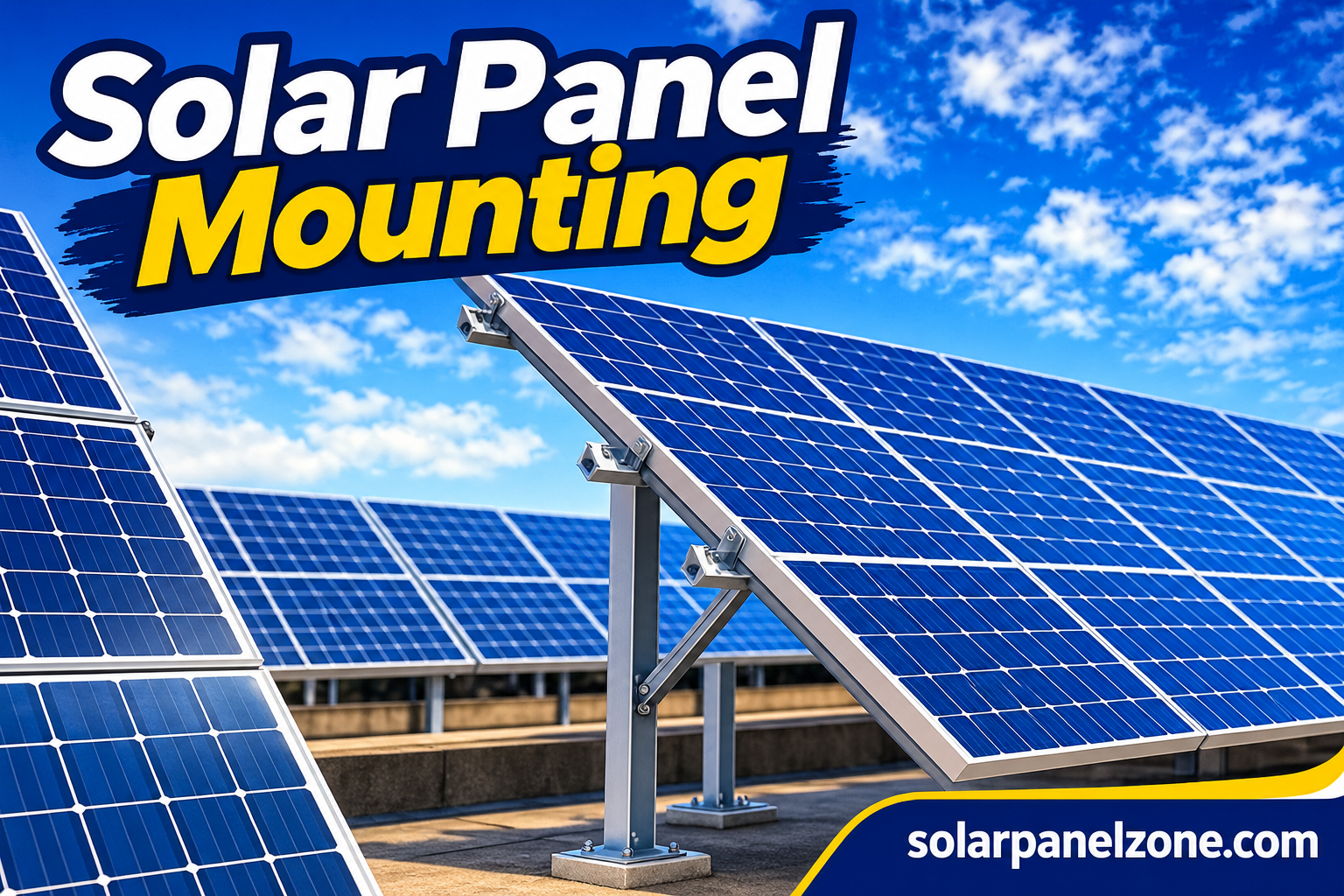
What Is Solar Panel Mounting?
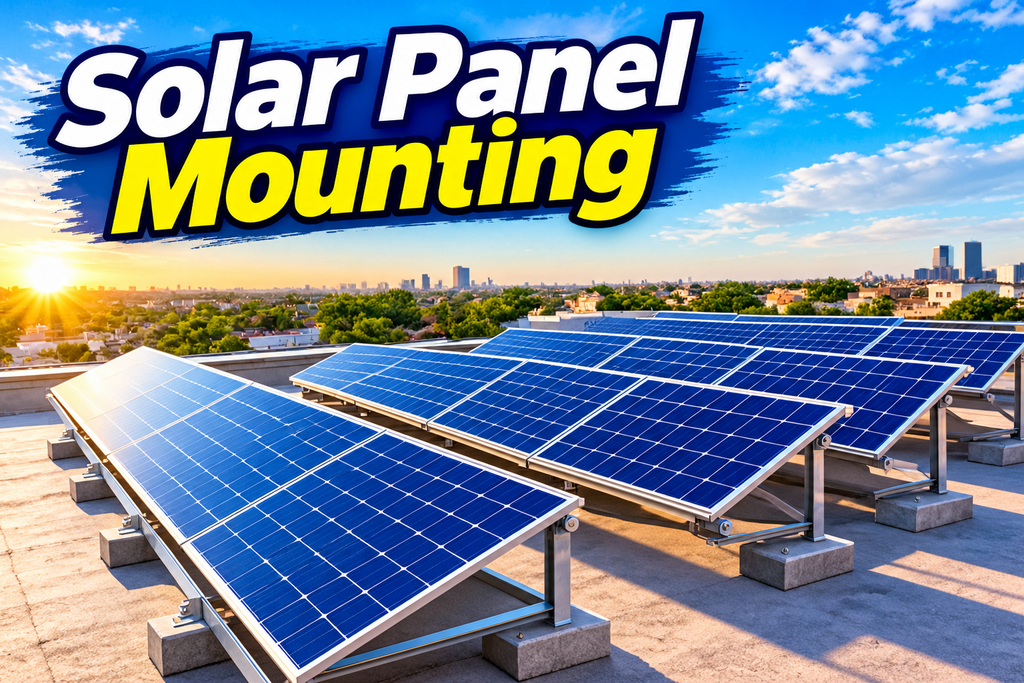
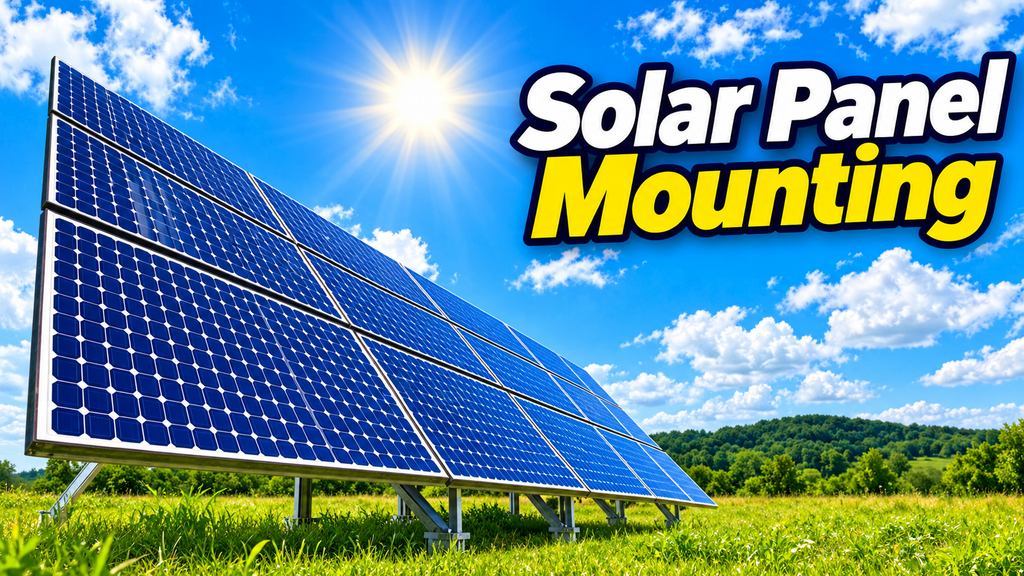
Solar panel mounting is the racking structure that secures photovoltaic Solar Panel Mounting to a roof, the ground or a pole. It sets their tilt and direction and resists wind, snow and corrosion. The three main types are roof, ground and pole mounts.
You will also hear it called Solar Panel Mounting racking, a Solar Panel Mounting mounting structure, a PV mounting system or, in parts of South Asia, simply a “Solar Panel Mounting structure.” In Germany and parts of Europe, installers talk about the “substructure.” It is all the same idea: the frame between your Solar Panel Mounting and whatever holds them up.
Why the Solar Panel Mounting System Matters
Panels get the attention, but the mount decides whether the array survives its first serious storm and keeps producing for decades.
A weak or badly installed mount can cause:
- Roof leaks and damaged roof warranties
- Solar Panel Mounting lifting or shifting in high wind
- Rust and failed fasteners within a few years
- Shading losses from poor placement
- Failed inspections and permit delays
Wind is the biggest structural threat to most arrays. Solar Panel Mounting behave like sails, and the forces land on the mount, not on the module.
Roof vs Ground vs Pole Solar Panel Mounting at a Glance
| Factor | Roof mount | Ground mount | Pole mount |
|---|---|---|---|
| Best for | Homes, offices, factories with usable roofs | Yards, farms, open plots | Small off-grid loads, pumps, cameras, remote sites |
| Typical scale | Small to large | Medium to utility scale | Small, often 1 to 4 Solar Panel Mounting |
| Upfront cost | Usually lowest | Higher (foundations, steel, trenching) | Moderate per Solar Panel Mounting |
| Tilt and direction | Limited by the roof | Fully adjustable | Often adjustable |
| Roof penetration | Yes, except ballasted and clamp types | None | None |
| Cleaning access | Harder | Easy | Moderate |
| Land needed | None | Yes | Small footprint |
Key takeaway: if you have a sound, unshaded roof, start there. If you have land and want the best angle and easy upkeep, ground mounts win. If the load is small and remote, a pole is simple and compact.
Types of Solar panel Mounting Systems
Roof Mounts
Roof mounts are the most common choice for homes and commercial buildings because they use space you already have. The right attachment method depends entirely on the roof.
Pitched roofs with asphalt shingles
The usual method is a flashed attachment (an L-foot or bracket with waterproof flashing) fixed into the rafters, with aluminum rails on top. Hitting the rafter matters. A bracket screwed only into decking is a weak point.
Tile roofs
Tile hooks slide under or replace individual tiles and bolt to the rafter. This takes experience, because broken tiles are the most common problem.
Metal roofs
Standing seam roofs are the easiest case. Clamps grip the seam, so no holes are needed. Corrugated and R-Solar Panel Mounting metal roofs need purpose-made brackets and careful sealing, often with butyl tape.
Flat roofs: tilted, ballasted or anchored
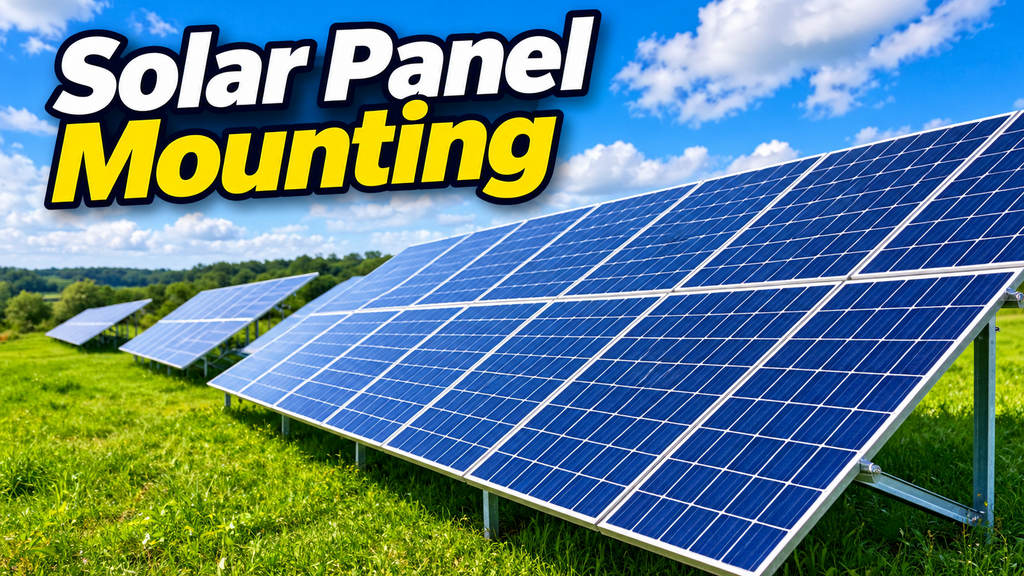
Tilted frames raise Solar Panel Mounting to a better angle. Ballasted systems hold the frame down with concrete blocks, avoiding penetrations but adding real weight. Anchored systems fix to the structure instead. Flat roofs always need a structural check.
RCC slab roofs and elevated steel structures
In many regions, including South Asia and the Middle East, flat reinforced concrete roofs are standard. Installers often build an elevated galvanized steel structure bolted or chemically anchored to the slab. Raising it clears water tanks and parapets and leaves room to clean underneath.
Ground Mounts
Ground mounts sit on foundations in a yard, field or industrial plot. They give the best control over tilt and orientation, and they are easy to clean and expand.
Common foundation options:
- Concrete footings or piers: robust, but slower and harder to remove
- Driven piles: fast in suitable soil
- Ground screws: minimal digging and little concrete, good where soil allows
Fixed-tilt mounts are the standard. Single- and dual-axis trackers follow the sun for more energy, but add motors, controls and maintenance. They tend to make sense mainly at larger scale.
Pole Mounts
A pole mount puts one or a few Solar Panel Mounting on a steel pole set in a concrete base. Top-of-pole frames suit remote cabins, water pumps, signs and monitoring equipment. Side-of-pole mounts handle very small Solar Panel Mounting.
The pole and its foundation carry all the wind load, so the base must be sized for it. Many designs allow seasonal tilt adjustment.
Other Variants
- Solar Panel Mounting carports:Solar Panel Mounting double as parking shade, at a higher structure cost
- BIPV: Solar Panel Mounting built into the roof or facade
- Floating mounts: used on reservoirs and ponds
- RV and van mounts: low-profile brackets or tilt legs
Components and Materials
| Component | What it does | Typical material |
|---|---|---|
| Rails or purlins | Carry the Solar Panel Mounting | Anodized aluminum or galvanized steel |
| L-feet, hooks, brackets | Connect rails to the roof | Aluminum or stainless steel |
| Mid and end clamps | Hold the Solar Panel Mounting frames | Aluminum with stainless bolts |
| Flashing | Seals roof penetrations | Aluminum, EPDM, butyl |
| Footings, piles, ground screws | Anchor ground and pole mounts | Concrete or steel |
| Bonding and grounding hardware | Electrical safety | Stainless or tinned copper |
Aluminum vs Galvanized Steel
Aluminum is light, easy to handle and naturally corrosion resistant, which suits roofs and coastal air. Hot-dip galvanized steel is stronger and usually cheaper per kilogram, so it dominates ground structures and long spans.
Watch for galvanic corrosion. Dissimilar metals in contact, such as bare aluminum against plain steel in a damp environment, corrode faster. Use compatible stainless fasteners and isolation where needed.
Rail-Based vs Rail-less
Rail-based systems allow flexible spacing and easier alignment on uneven roofs, but cost more and add wind exposure. Rail-less (direct attachment) systems use fewer parts and install faster, but give you less room to adjust. Rails are generally safer when roof attachment points do not line up neatly with panel edges.
Tilt Angle and Orientation
A good starting point is a tilt close to your latitude, facing the equator (south in the Northern Hemisphere, north in the Southern). Fine-tune for how you use the power.
- Year-round grid-tied: roughly latitude
- Winter-heavy off-grid loads: steeper, roughly latitude plus 10 to 15 degrees
- Summer-heavy loads such as cooling or irrigation: shallower, roughly latitude minus 10 to 15 degrees
- Dusty areas: keep some tilt so rain and washing clear the dirt
Free tools such as PVWatts, PVGIS and the Global .Solar Panel Mounting Atlas let you test angles against real weather data for your location. On pitched roofs you are usually limited to the roof angle, and that is normally fine.
Wind, Snow and Structural Loads
This is where installations succeed or fail, and where many guides say the least.
The loads that matter
- Dead load: the weight of panels, rails and any ballast
- Wind uplift and drag: often the governing load
- Snow load: critical in cold regions
- Seismic load: relevant in earthquake zones
- Thermal movement: long rail runs expand and need gaps
A simple way to understand wind uplift
Wind pressure rises with the square of wind speed. Double the speed and the pressure roughly quadruples. That is why an array that is fine in a normal breeze can fail in a storm.
Pressure is also uneven. Roof corners, edges and ridges see much higher uplift than the middle, so layouts often keep Solar Panel Mounting back from edges or add more attachments there. Tilted arrays on flat roofs catch more wind than flush ones, which is why ballast and anchor counts rise with tilt.
Standards and references
- UL 2703: mounting system safety, bonding and fire testing (mainly North America)
- IEC 62548: PV array design requirements
- IEC 61215 and IEC 61730: module qualification and safety
- ASCE 7: design loads in the US
- Eurocode EN 1991: actions on structures in Europe
- NEC: US electrical code, including grounding and bonding
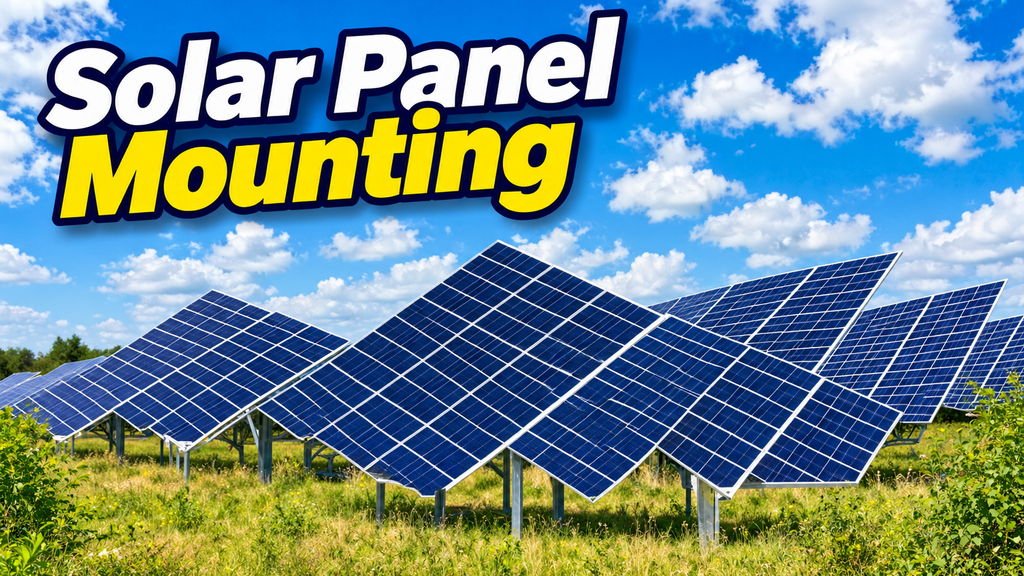
Local building codes and utility rules sit on top of all of these. Do not copy a layout from another site. Use the racking manufacturer’s design tool or a structural engineer to verify attachment spacing, rail spans and foundations for your roof and wind zone.
Climate and Regional Considerations
| Climate | Main concern | What to do |
|---|---|---|
| Snow regions (northern Europe, Canada) | Snow load, sliding snow | Stronger rails, steeper tilt, snow guards where needed |
| Hurricane or cyclone zones (US Southeast, Caribbean, Australia) | Extreme uplift | Engineered attachments, certified wind ratings, no shortcuts |
| Hot, dusty regions (South Asia, Middle East) | Dust, heat, summer storms | Elevated structures, airflow under Solar Panel Mounting, cleaning access, galvanized coating |
| Coastal air | Salt corrosion | Aluminum or high-grade coated steel, stainless fasteners |
| Bushfire-prone areas | Fire rating, debris | Compliant materials and clearances |
Terminology varies too. “Racking” is common in the US, “mounting system” in the UK and EU, “substructure” in Germany and ” Solar Panel Mounting structure” across South Asia. Searching with the local term often turns up better local suppliers.
How Much Does Solar panel Mounting Cost?
Costs depend on country, steel and aluminum prices, labor, roof complexity and system size, so any single figure is only a rough guide.
For US reference, one supplier’s 2026 racking guide lists roughly $0.50 to $1.00 per watt for flush roof mounts, about $0.60 to $1.20 per watt for tilted flat-roof systems and about $0.80 to $1.50 per watt for ground mounts. Treat those as US-only supplier figures, not global prices.
Relative cost drivers worldwide:
- Lower: flush roof mounts on simple roofs
- Medium: tilted or ballasted flat-roof systems, pole mounts
- Higher: ground mounts (foundations, trenching, steel), carports
- Highest: trackers, because of motors, controls and maintenance
Ask for itemized quotes that separate structure, labor, civil work and engineering. That makes quotes comparable and shows where money is going.
How to Choose: A Simple Decision Guide
Work through these in order.
- Check the roof. Is it structurally sound, unshaded and unlikely to need replacement within 5 to 10 years? If not, fix it first or consider a ground mount.
- Check for land. If you have safe, open space, ground mounting gives better angle and easier maintenance.
- Size the system. Small remote loads favor poles. Larger systems favor roof or ground.
- Map the shade. Choose the surface with the fewest obstructions in the middle hours of the day.
- Check local loads. High wind or snow means stronger structure and engineered foundations.
- Plan access. If you cannot clean or inspect safely, expect lower output over time.
- Confirm permits. Many jurisdictions require structural documentation for the Solar Panel Mounting system.
For homeowners: most often a flashed roof mount or, with space, a ground mount. For farms and off-grid users: ground or pole structures near the load. For installers and commercial roofs: weight limits, ballast layouts and attachment counts usually drive the choice.
How Installation Works
Roof mount, step by step
- Survey the roof, rafters and shading.
- Mark rafters and layout, respecting local setbacks from edges and ridges.
- Install flashed attachments into the rafters.
- Attach and level the rails.
- Fit panels with mid and end clamps at the manufacturer’s clamping zones and torque.
- Bond and ground the array.
- Secure cabling off the roof surface and inspect everything.
Ground or pole mount, step by step
- Check soil, drainage and shade.
- Excavate or drive piles, or set ground screws.
- Pour footings and let concrete cure fully.
- Erect posts or the pole plumb and level.
- Attach rails or the tilt frame, then the panels.
- Ground the structure and route cables.
DIY or installer?
Small ground and pole systems are realistic for skilled DIYers. Roof work carries fall risk, leak risk and electrical code requirements, so a qualified installer is the safer path. Requirements vary by country, so check local rules first.
Maintenance and Cleaning Access
Mount design affects how easily you can keep the array clean and safe. Leave walkways, keep enough height to reach under panels, and avoid layouts that force ladder work over fragile roofs.
After major storms, check clamp torque, flashing, fasteners and any signs of corrosion. Many manufacturers warrant structures for 10 to 25 years, but coating, climate and upkeep decide the real lifespan.
Common Mistakes to Avoid
- Skipping the wind and structural load check
- Fixing brackets to decking instead of rafters
- Poor or reused flashing
- Mixing dissimilar metals without isolation
- Over-tightening clamps or clamping outside the approved zones
- Using uncoated steel in humid or coastal air
- Setting structures too low to clean or ventilate
- Ignoring future shade from trees or neighboring buildings
- Working on roofs without fall protection
Alternatives to Standard Mounting
- BIPV or solar roof tiles: better appearance, higher cost
- Carport canopies: dual-use space at a higher structure cost
- Trackers: more energy, more moving parts
- Portable panels: flexible for camping and backup
- Shared or community solar: where installing on-site is not possible
Frequently Asked Questions
What is the best way to mount solar panels?
Roof mounting is usually cheapest for homes with sound, unshaded roofs. Ground mounting gives the best angle and easiest maintenance. Pole mounts suit small or remote systems. The best choice depends on your roof, land and local loads.
Is a ground mount better than a roof mount?
Not always. Ground mounts allow ideal tilt, easy cleaning and no roof risk, but they cost more and need land. A sound, sunny roof is typically the more economical option.
Can you mount solar panels on a flat roof?
Yes. Use tilted frames that are ballasted, anchored or a hybrid of both. Have the roof’s load capacity checked first, because ballast adds significant weight.
Do solar panels damage roofs?
Not when installed properly with correct flashing and rafter attachment. Leaks usually come from poor sealing or misplaced fasteners. Non-penetrating options such as standing-seam clamps and ballast reduce that risk.
What angle should solar panels be?
Start near your latitude, facing the equator. Go steeper for winter-heavy use and shallower for summer-heavy use. A free yield tool such as PVWatts or PVGIS can confirm the best angle for your site.
How much does solar panel racking cost?
It varies widely by country, material and mount type. In the US, one supplier guide shows roughly $0.50 to $1.50 per watt across common roof and ground types. Get itemized local quotes for an accurate figure.
How long do solar mounting systems last?
Quality aluminum or galvanized systems are designed to last as long as the panels, often 25 years or more. Many manufacturers warrant them for 10 to 25 years, depending on environment and maintenance.
Can I install solar mounting myself?
Small ground or pole systems are feasible for experienced DIYers. Roof installations and electrical connections involve safety and code risks, and some regions require licensed installers or inspections.
How far apart should rails be?
It depends on the panel size, clamping zones, attachment spacing and local loads. Follow the racking manufacturer’s span tables and the panel manual rather than a general rule.
What material is best for solar mounts?
Anodized aluminum suits lighter roof systems and corrosion-prone air. Hot-dip galvanized steel suits strong, economical ground and elevated structures. Use stainless fasteners either way.
Conclusion
The best solar mounting system is the one matched to your roof or land, your climate and your budget. Roof mounts usually win on cost, ground mounts on performance and access, and pole mounts on flexibility for small loads.
Before you buy, check the structure, work out your local wind and snow loads, choose corrosion-resistant materials, confirm permit rules and compare itemized quotes. A well-chosen mount is a quiet part of the system, and that is exactly what you want.
These information about solar panel mounting are gathered from different surveys, medical tests and tech giants like Tom’s Guide and more. Our top priority is to provide you valuable information.
For More Details About Different Solar Panels Click Here