The Short Answer
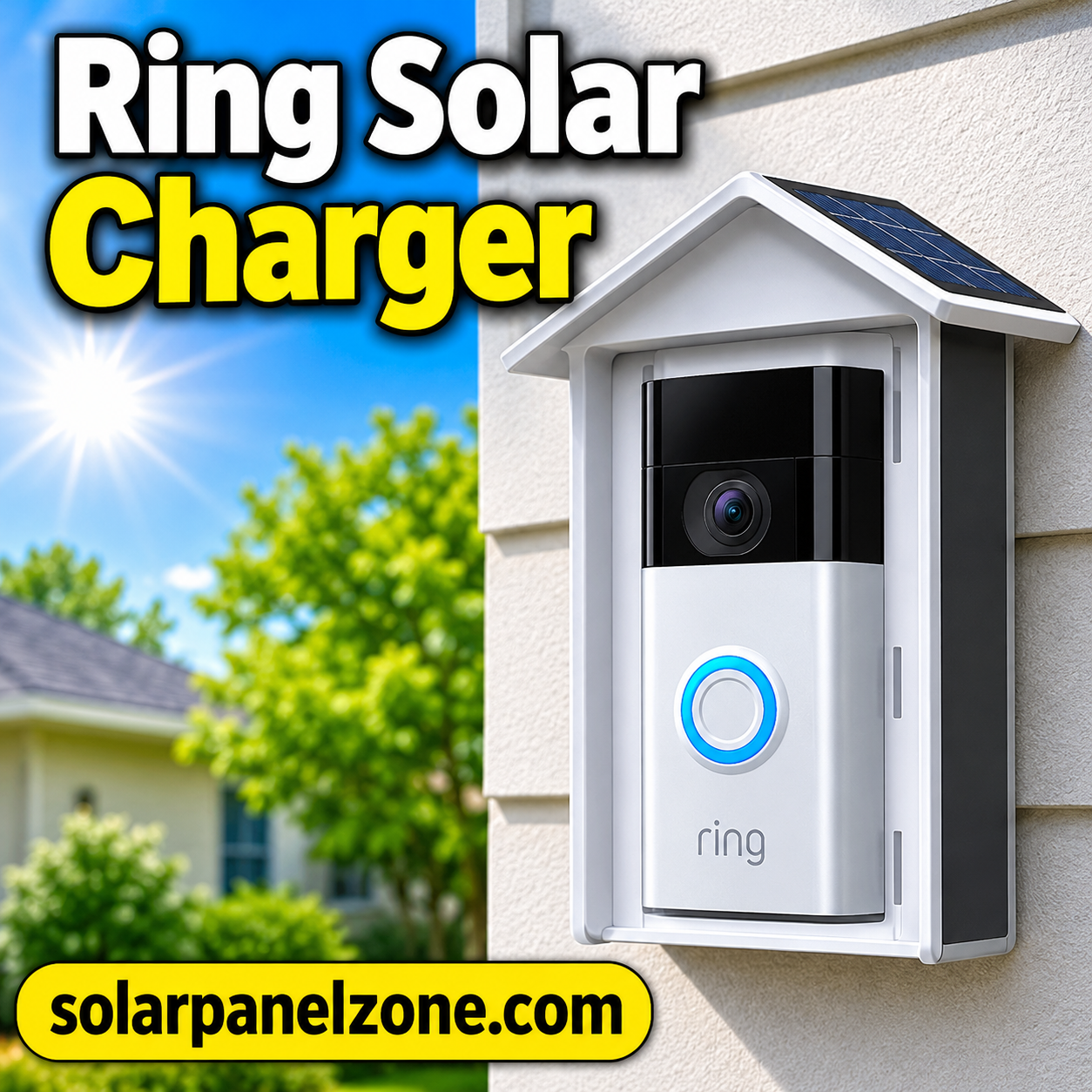
A Ring solar charger is a mounting bracket with built-in solar panels that slowly tops up the battery of a compatible Ring Solar Charger. It needs three to four hours of direct sunlight a day to be useful. Chargers are not interchangeable between doorbells, so match the connector first and everything else second. ring
Most of the frustration around these chargers comes from one problem: Ring Solar Charger naming. The same product shows up as “2nd Gen,” “Newest Model,” “2K” or “4th Gen,” depending on the page and the country. This guide untangles that, then covers how the charger works, where it fails, and whether it is worth buying.
What a Ring Solar Charger Actually Does
Think of it as a trickle Ring Solar Charger for your doorbell’s battery. It does not turn a battery doorbell into a hardwired one, and it does not charge quickly.
It mounts behind the doorbell using the existing drill holes, and there is no in-app setup. Sunlight hits the panels on the bracket, and a short cable carries a small current to the doorbell’s battery. ring
The goal is to offset daily drain. On a sunny wall with moderate foot traffic, that can mean far fewer trips to the Ring Solar Charger cable.
Who Benefits Most
The charger makes the most sense in these situations:
- Homeowners and renters with a battery doorbell and no wiring option
- Busy doorsteps, such as street-facing entrances, where motion alerts drain the battery faster
- Sunny walls with a clear view of the sky for several hours
- Property managers and installers who want to cut recharge visits across many units
It is a weaker fit for porches under deep eaves, north-facing walls in the northern hemisphere, or heavily shaded entrances.
Which Ring Solar Charger Fits Which Doorbell
This is the question that matters most. Ring Solar Charger use either a USB-C connector or a fork connector cable, depending on the doorbell. Older generations used micro-USB. ring
| Charger type | Compatible doorbells | Notes |
|---|---|---|
| USB-C solar charger | Ring Solar Charger Battery Doorbell with a USB-C power connector | Not compatible with Video Doorbell 2, 3, 3 Plus, 4, Battery Doorbell Plus or Battery Doorbell Pro |
| Fork-connector charger | Video Doorbell 3, 3 Plus, 4, Battery Doorbell Plus and Battery Doorbell Pro | Slightly larger bracket than the USB-C version |
| Fork-connector charger (2K line) | Battery Doorbell 2K, 2K Plus and 2K Pro | Different bracket dimensions from the model above |
| Micro-USB charger | Video Doorbell (2nd Gen, 2020 release) | Ring Solar Charger lists the chargers for Video Doorbell 2 and Video Doorbell (1st Gen) as discontinued solar charger for battery doorbell battery doorbell +4 |
Retailers sometimes list limited stock of discontinued models. Treat that as a short-term option, not a long-term plan.
How to Identify Your Doorbell
- Open the Ring Solar Charger app and check the device name and model in your device settings.
- Look at the label on the doorbell or its original box.
- Match the model name to the table above.
- Confirm against Ring Solar Charger own compatibility page for your country before you pay.
Step 4 matters because Ring Solar Charger regional pages use different labels for similar hardware. If your listing doesn’t mention your exact model, don’t guess.
How Ring Solar Charger Really Works (and Its Limits)
Ring Solar Charger are modest by design. The original Ring charger’s published rating was 0.56W at 5.6VDC. That is enough to offset drain, not to Ring Solar Charger from empty in an afternoon. ring
Two behaviors surprise new owners.
It stops Ring Solar Charger near the top. Above 90% charge, the battery won’t accept a new charge. Below 90%, it will take charge from the Ring Solar Charger. A battery sitting at 92% isn’t a fault. ring
The app doesn’t say “solar.” With a solar charger connected, the Device Health page still shows the power source as a battery. To judge whether it’s working, watch the battery level over a week or two rather than looking for a special icon. ring
Sunlight, Orientation and Climate
The charger lives or dies by its location.
Hours of Direct Sun
Aim for the three-to-four-hour minimum Ring recommends. Morning sun on a shaded-by-noon wall is better than nothing, but afternoon-only sun behind a tree may not be enough.
Which Way Should It Face?
Retailer guidance gives a simple rule. In the northern hemisphere, install facing south. In the southern hemisphere, install facing north. That keeps the panels pointed toward the sun’s path for most of the day. pbtech
Heat, Cold and Cloud
The original charger’s listed operating range was -20.5°C to 48.5°C. In very hot climates, a wall that bakes all afternoon can stress electronics, so avoid mounting where heat is extreme if you have a choice. ring
In cloudy or low-sun regions, expect smaller gains. You may still see longer intervals between recharges, but the charger won’t eliminate them.
Installing a Ring Solar Charger
Setup takes minutes if your doorbell is already mounted.
- Charge the doorbell battery first. One retailer’s guidance is to fully charge the battery before installing it in the charger. pbtech
- Remove the doorbell from its current bracket.
- Fit the solar bracket over the existing drill holes. Use the supplied screws and anchors if needed.
- Connect the cable (USB-C or fork) to the doorbell.
- Mount the doorbell on the solar bracket.
- Check the battery over the next few sunny days.
If you use an angled mount, keep it to one accessory. Ring recommends using only one wedge or corner kit with the solar charger. desertcart
Official Chargers vs Third-Party Options
You’ll find two broad categories on the market.
Official Ring chargers are built for specific models, include mounting hardware, and are the safest bet for fit and warranty. The original charger carried a 1-year limited warranty. ring
Third-party panels come from brands such as Wasserstein, plus several marketplace sellers. Some are universal flexible panels, such as a Wasserstein 2.5W panel marketed for Ring battery doorbells. Others pair a panel with an internal battery. bestbuy
The trade-offs are real:
- Price and features may beat the official option
- Fit and finish can vary
- Warranty and safety claims are harder to verify, especially for panels with built-in batteries
If you buy third-party, check the connector, read the return policy, and look for credible safety information before you mount anything on your front door.
What It Costs Around the World
Prices vary by country, retailer and promotion. Examples seen in 2026:
| Region | Example | Price |
|---|---|---|
| United States | Amazon / Abt Electronics | $44.99 / $44.00 |
| United States | Prime promotion | $35 vs a regular $50 |
| Canada | Ring’s own page | USD $49.99 |
| UAE | Virgin Megastore | AED 199 |
| New Zealand | PB Tech (2nd Gen, out of stock at the time) | NZD $80.01 including GST |
| United Kingdom | Third-party seller deal | £15.25 Ring Solar Charger +5 |
The UK example is a third-party listing, not an official Ring price, so don’t compare it directly to the others. Check current prices before buying, since promotions come and go.
Is It Worth It?
It depends on your wall and your habits.
It’s worth it if:
- Your doorbell gets steady direct sun
- You’re tired of recharging every few weeks
- Taking the doorbell down is a hassle, for example in shared or high-mounted installs
Skip it if:
- The doorbell sits in near-constant shade
- A spare battery or a hardwired setup suits you better
- Your doorbell model has no current charger available
A fair rule of thumb: if you recharge the doorbell more than a handful of times a year and your wall is sunny, the charger usually pays for itself in convenience.
When It Doesn’t Work: Troubleshooting
If the battery isn’t improving, work through these checks.
- Wrong charger. A connector mismatch is the most common cause.
- Not enough sun. Watch the wall for a full day and note when it’s lit.
- Battery already above 90%. It won’t take more charge.
- Loose connection. Re-seat the cable at both ends.
- Dirty panels. Dust, pollen or bird droppings reduce output. Wipe gently.
- Very high traffic. If motion events drain the battery faster than a small panel can replace it, you’ll still need occasional manual charging.
Alternatives to Consider
| Option | Best for | Downside |
|---|---|---|
| Spare battery | Swapping without downtime | Manual charging still needed |
| Hardwired install | Homes with existing doorbell wiring | Needs wiring work or an electrician |
| Power adapter or plug-in kit (where supported) | Doors near an outlet | Cabling and model limits |
| Third-party solar panel | Lower price or extra features | Fit and safety checks fall on you |
For Installers and Property Managers
If you manage many units, the calculation shifts from convenience to maintenance cost.
Fewer recharge visits can save time across a portfolio. But the savings depend on each unit’s sun exposure, so don’t assume the same result everywhere. Standardize on one doorbell model where possible, since each doorbell generation needs the right charger.
Order a small batch first, track battery levels across sunny and shaded units for a month, then scale up.
Quick Checklist Before You Buy
- Doorbell model confirmed in the Ring app
- Connector type matched (USB-C, fork or micro-USB)
- Wall gets at least three to four hours of direct sun
- Charger is current, not discontinued
- Warranty and returns checked
- Battery fully charged before installation
Frequently Asked Questions
Does the Ring solar charger work with every Ring doorbell?
No. Chargers are built around a specific connector and model, and some older ones are discontinued.
How much sun does it need?
Three to four hours of direct sunlight a day. More is better, and shade reduces results. ring
Will it charge a full battery?
No. Above 90%, the battery stops accepting new charge. ring
How do I know it’s charging?
The app still shows the battery as the power source. Track the battery percentage over several days.
Do I need to set it up in the Ring app?
No in-app setup is required. ring
Is it weatherproof?
It’s described as weather-resistant, and the original charger listed an operating range of -20.5°C to 48.5°C. Resistant isn’t the same as indestructible, so avoid extreme heat spots where you can. ring
Can I use a third-party solar panel instead?
Yes, but confirm the connector, read the warranty terms, and check safety details, particularly for panels with built-in batteries.
Does it replace wiring?
Not entirely. It extends battery life but still depends on sunlight and on how much your doorbell is triggered.
Conclusion
A Ring solar charger is a practical add-on when three things line up: the right connector, enough direct sun, and a doorbell you’d rather not take down every few weeks. It’s not a fast charger, and it won’t work on every model.
Start by confirming your doorbell and matching the connector. Then check how much sun your wall really gets, and buy from a seller with clear returns. After two weeks, look at your battery trend. That will tell you whether the charger is earning its place.
Unfulfilled Points: First-hand test results and measured output could not be included because none were provided. The unverified “590” term was left out because no matching product could be confirmed. Visual connector diagrams and third-party safety certification details could not be supplied in text form and should be added or verified before publishing.
These information about solar panel mounting are gathered from different surveys, medical tests and tech giants like Tom’s Guide and more. Our top priority is to provide you valuable information.
For More Details About Different Solar Panels Click Here